Category: 136 Inquiry

Change in Education – From Traditional Schooling to online study to AI-Classrooms Chapter 4

Opportunities and Concerns in AI-Classrooms

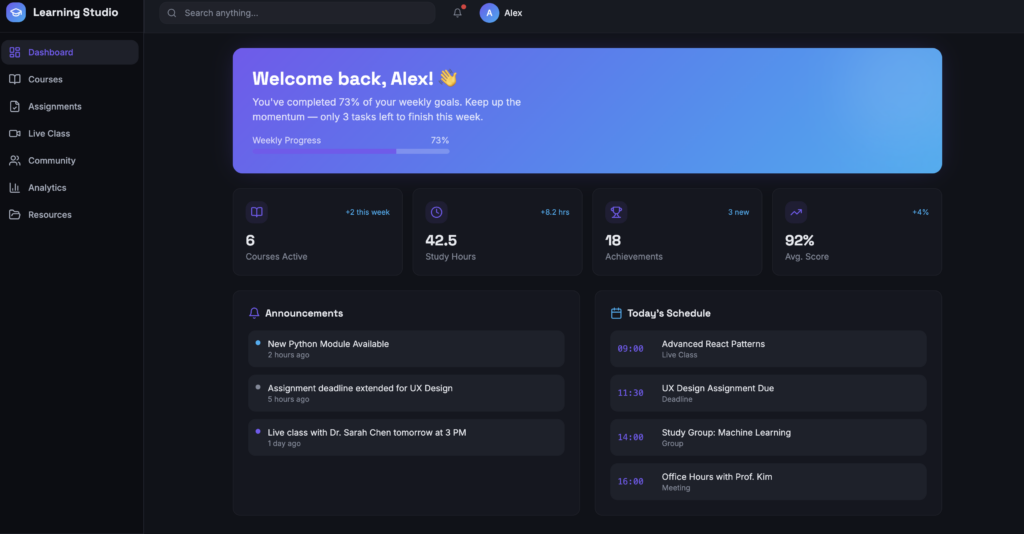
Here is an example of using AI-classroom. There are some functions and features that I have included in this website.
https://edci136.lovable.app

My webpage for tracking students' learning process.

In order to improve self-learning, students may now track their own learning process through this website. On this website, there will be different sections that show students’ performance, active time, and goals. The website will show the results to students, and students may find it easier to track their learning process. Moreover, by including AI to analyze student performance, students may receive feedback from the AI, and teachers may see their results on their end. Teachers can redesign their teaching by understanding students’ areas of weakness. This will maximize the learning experience and help students improve their academic performance.

By using this website, teachers will understand their classes better. Teachers will no longer rely only on textbooks to teach students. They may address students’ weaknesses and identify what they need more help with. The teaching method will no longer be one-way; instead, it will involve feedback and redesign depending on students’ needs.
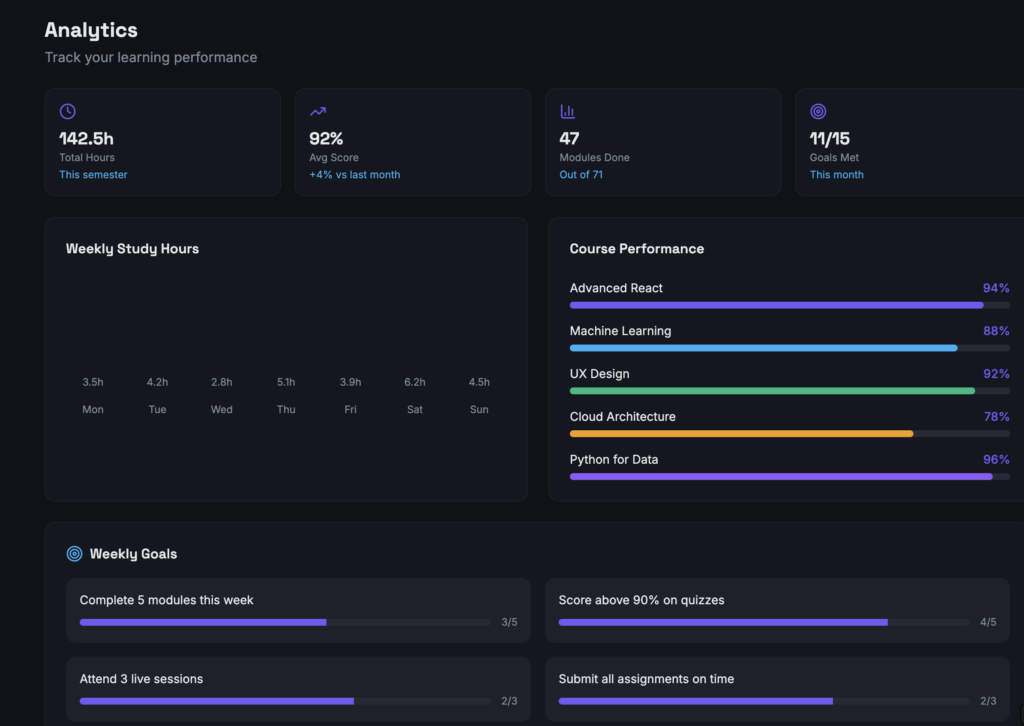
My webpage for tracking students' learning process.

On the other hand, I have added a community feature to this website, which will encourage students to be more active and participate in class more often. By setting up some competitions, such as a leaderboard, it will encourage students to be more active in learning outside of class. Moreover, students may exchange their ideas and thoughts in the community. They will be able to learn outside of the classroom.
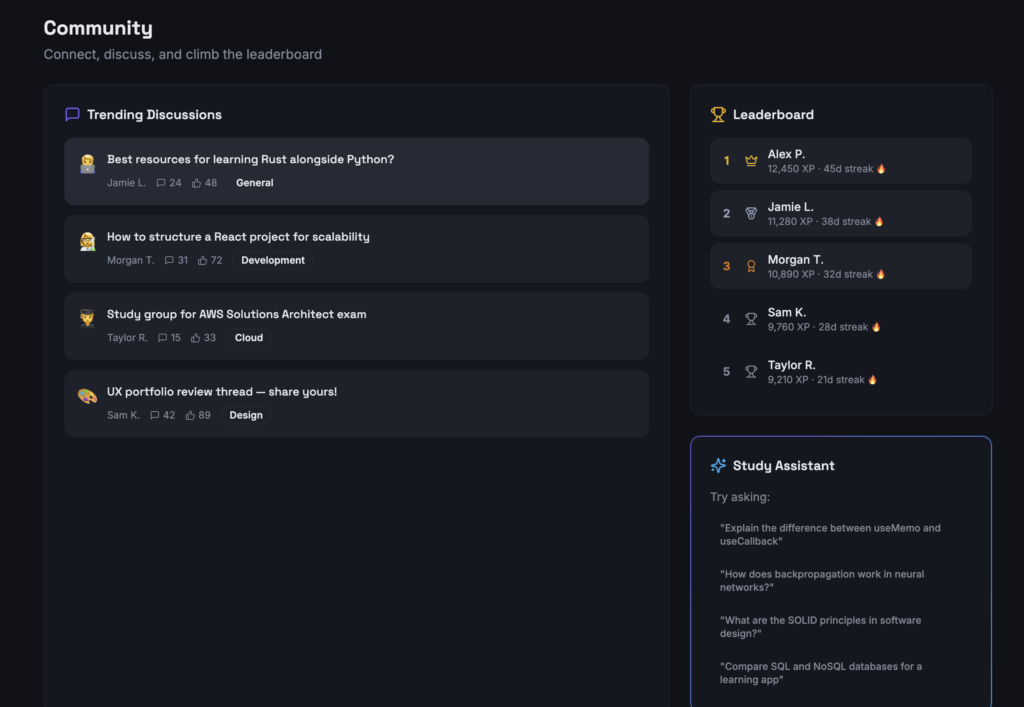
My webpage for tracking students' learning process.

After talking with Instructor Adrian Granchelli, I had a great conversation with him. He has a Master of Educational Technology and is currently pursuing a PhD in Educational Studies with a focus on educational technology at the University of Victoria. As a PhD student and a contract instructor at UVic, he shared his opinions on different questions. Here are his opinions on each question.

Adrian Granchelli’s thoughts:

  • Do you think AI should be used more as a tutor, a teaching assistant, or a teaching tool in classrooms? Why?

Teachers may provide review and personal feedback, but AI cannot.

  • How is AI changing the role of teachers compared with traditional classrooms?

This is a big change for both teachers and students. For example, the way AI is breaking into today’s society is similar to how the internet was introduced to the world in the 2000s. Therefore, Adrian believes that AI can accelerate the learning and studying process.

  • How can AI improve student independence, or could it make students rely too much on technology?

Yes, there is a risk and a negative effect on student learning, since AI is considered a large language model. Therefore, it can limit people’s ability to remember things, and students may become overly reliant on technology rather than using their own brains. For example, because of the Google effect, students may simply search for the answer directly without going through any learning process in between. This can be harmful to student learning.

  • How will AI change the relationship between teachers and students in a positive or negative way?

Instructor Adrian hopes that teachers will be able to use their social skills and have a better connection with students in the future. Moreover, he also mentioned that teachers have been devalued in today’s society. Since AI will never be able to replace teachers, he thinks that the value of teachers has been overlooked by the education system.

  • In your opinion, what skills will students need most in an AI-classroom environment?

He mentioned that it is important to have evaluative judgment and critical thinking skills. These two skills will be useful and help students learn and receive the right information. Therefore, teachers should spend more time teaching students how to apply these skills in their self-learning with AI.

  • How should schools balance the benefits of AI with concerns about bias?

He mentioned that AI usually provides one answer, and students often think that it is the only answer. This is a huge misunderstanding and can mislead students in learning. Therefore, teachers should teach students critical thinking skills so they can apply their knowledge when it comes to self-learning with AI. AI cannot provide the full picture of what you are looking for. Therefore, he mentioned that students need to learn how to learn outside of AI, fact-check the information they receive, and seek help or confirmation from teachers when they find something online or through AI. Teachers will be the ones who guide them on the right educational path.

In conclusion, there are pros and cons when you use different tools, and it depends on how you use them in your learning. it is important to know how to use the tools in the right way, and that will help you learn more effectively. One thing is that we are now watching a huge milestone of education changing in the next few years.
Change in Education – From Traditional Schooling to online study to AI-Classrooms Chapter 3

In today’s topic, I will be focusing on how AI is changing the roles of teachers and students. I think this is really interesting to explore. By 2025, AI has become smarter and more accurate in providing answers to users. Many educational platforms have also included AI in their systems. Even Google, Adobe, Facebook, and many other things around us have been incorporating AI. Therefore, education is also reaching a milestone in 2025.

People know that education means helping students learn knowledge before entering society. Therefore, that knowledge has to be related to today’s world and up-to-date information. Preventing students from using AI will limit their learning potential; therefore, teaching students how to use AI is the right approach, and AI can be a great assistant tool while studying.

First, what are AI classrooms?

AI classrooms mean that studentS are allowED to use AI in the classroom. Ai will help student learning in the classroom as an assistant.

How AI is Changing the Role of Teachers and Students

There are some common misunderstandings people have about using AI in the education system. First, it is important to make it clear that using AI does not mean that teachers will be replaced by AI. AI can be a great tool for engaging students through “structured feedback,” “interactive scaffolding,” and “personalization alignment.” Students can benefit from these supports in their learning process.

On the other hand, teachers can also benefit from AI by using it for “lesson planning,” “personalized feedback,” and “administrative tasks.” Therefore, teachers will be able to spend more time discussing with students, focusing on student relationships, and guiding students toward deeper learning experiences rather than spending all their time on routine work.

Furthermore, teachers have the responsibility to teach students how to think critically and not trust AI too easily. Teachers should highlight that it is important to check whether the information students receive from the internet or AI is true or not. Without critical thinking, students may accept biased or misleading information without questioning it.

For example, when users are using Claude, it is important for students to know how to properly use certain code inputs in the AI system. Once those codes are entered into the system, they can help the AI understand and answer questions more accurately. Therefore, teachers can be the ones who teach students how to use AI, rather than letting them use it only to look for answers without any learning.

Therefore, the education system should change its structure and be open-minded about students and teachers using AI in the classroom. It is important to make sure the roles are clear and to consider what teachers should focus on more when the education system includes AI learning. Teachers will still be able to provide support that AI classrooms cannot provide, such as personalized feedback and discussions with different students.

In conclusion, I think it is important for the education system to teach students and teachers how to use AI in the right way. Furthermore, teachers should know how to guide students in using AI properly so they can learn more effectively. Eventually, using AI properly can provide a more effective method of learning.

Reference

Long DY, Wang S, Md Rashid S and Lu XT (2026) Artificial intelligence in higher education: a systematic review of its impact on student engagement and the mediating role of teaching methods. Front. Educ. 10:1648661. doi: 10.3389/feduc.2025.1648661

Change in Education – From Traditional Schooling to online study to AI-Classrooms Chapter 2

In today’s topic, I will focus on what changed in education in 2020. I personally think that this year was the first step in changing education. I would say 2020 became a milestone for education, exposing the outdated nature of traditional learning approaches. Since then, people have sought new methods of teaching and learning to help students succeed under different circumstances.

The COVID-19 outbreak in late 2019 led to social distancing, and the government rolled out restrictions. People could not go to school due to COVID-19. Everyone panicked, not only because of the virus itself, but also because students could not study the way they used to. In 2020, online learning and online lessons became common around the world. Students used Zoom to learn and participate in class. Therefore, in today’s topic, I would like to talk about Zoom and the benefits of learning online.

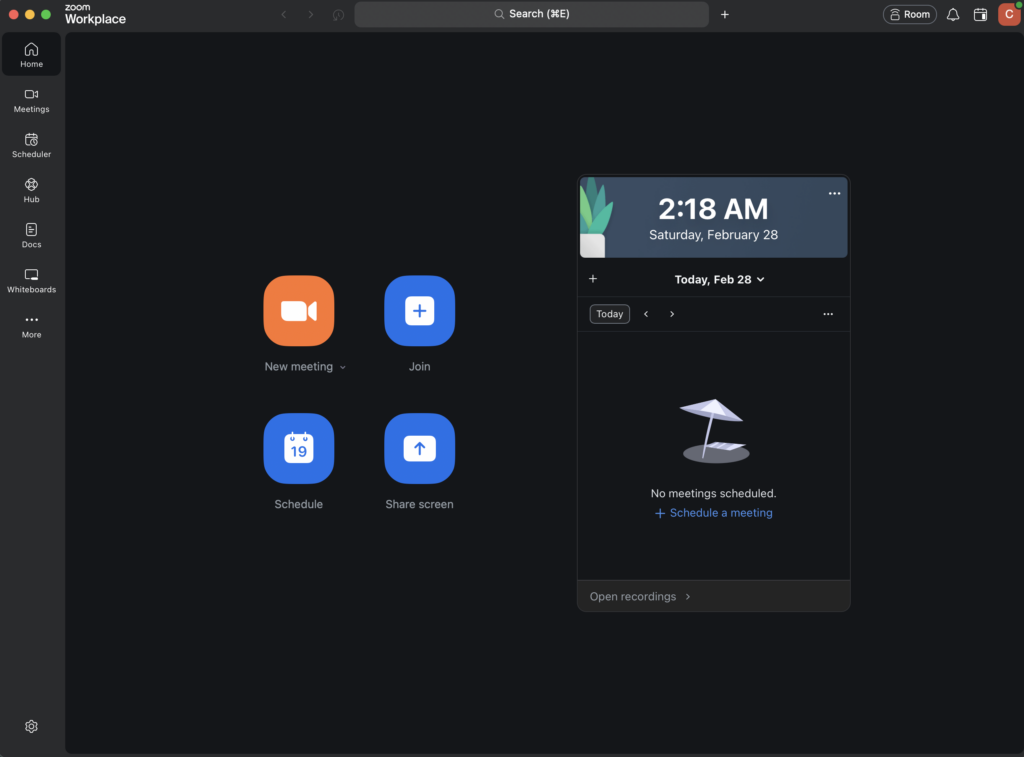
Screenshot of a Zoom landing page

Zoom is one of the common apps that students will use in 2020. We use this app to participate in class.

I think it will be a good idea to use Zoom to record, since Zoom has become one of the most common tools students use to participate in class. Students are able to study more flexibly. It has expanded the possibilities for learning. Learning is no longer limited. Students can study or join class even from a different country. Furthermore, they are able to study or attend lessons in a comfortable environment.

Moreover, Zoom gives students more flexibility with time; they can schedule meetings with their classmates at times that work for them.

Last but not least, Zoom allows teachers to save recordings. Even if students miss a lesson for personal reasons, they can still watch the recording after class.

The benefits of online learning

Benefits of Online learning

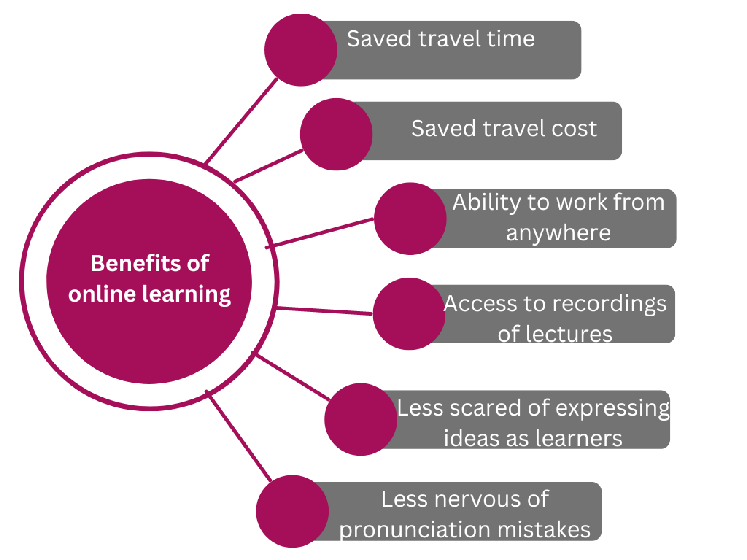
I think tools such as Zoom have broken the limits of learning. Students are no longer limited in how they learn. Therefore, online learning has provided many benefits to students, such as saving travel time, reducing travel costs, allowing students to study where they feel comfortable, and learning at times that work for them.

I would love to share this quote. Online learning, according to Latchem (2014), “ceases to be mere delivery of digital learning products for the students’ consumption and becomes a platform whereupon knowledge and learning are created by students through interaction, collaboration and inquiry” (p. 311).

Social media has become one of the most useful tools for learning. Therefore, I believe social media platforms like WordPress can serve as supplementary tools to help students maintain their learning progress. Students can post their feedback and learning progress throughout the semester.

This approach breaks away from traditional teaching models, integrates more diverse educational strategies, and can enhance students’ enthusiasm for learning.

Students have the freedom to manage their own learning time and actively manage their learning process. Teachers provide support to all members through group meetings. Students can discover more interesting knowledge through peer interaction, and when encountering difficulties, they can exchange ideas and learn from each other. Therefore, I believe 2020 was a significant milestone in the development of the education system.

Refenece

A Set of Essentials for Online Learning : CSE-SET – Scientific Figure on ResearchGate. Available from: https://www.researchgate.net/figure/Benefits-of-online-learning_fig3_369556674

Conrad, D., & Openo, J. (2018). Assessment strategies for online learning: Engagement and authenticity. AU Press.

Change in Education – From Traditional Schooling to online study to AI-Classrooms Chapter 1

I think this will be an interesting topic to explore. Education across 19 countries was quite similar until 2019. After 2019, education methods, styles, and systems changed significantly. Before 2019, I would say most education remained the same. The main difference across these 19 countries was that people mainly received knowledge from textbooks or teachers. In the early 20th century, people were able to learn online through computers. But after 2019, education changed a lot. This term, I will discuss changes in education before 2019, in 2020, in 2021, and the future of education. In today’s topic, I will focus on education methods before 2019.

Looking back across 19 countries, I have noticed that educational systems and teaching methods have changed a lot because computers and online learning have become more common in people’s daily lives. Students can easily access technology and the internet to support their learning. Therefore, I would say that in the past, we mainly learned through textbooks or teachers but times has changed.

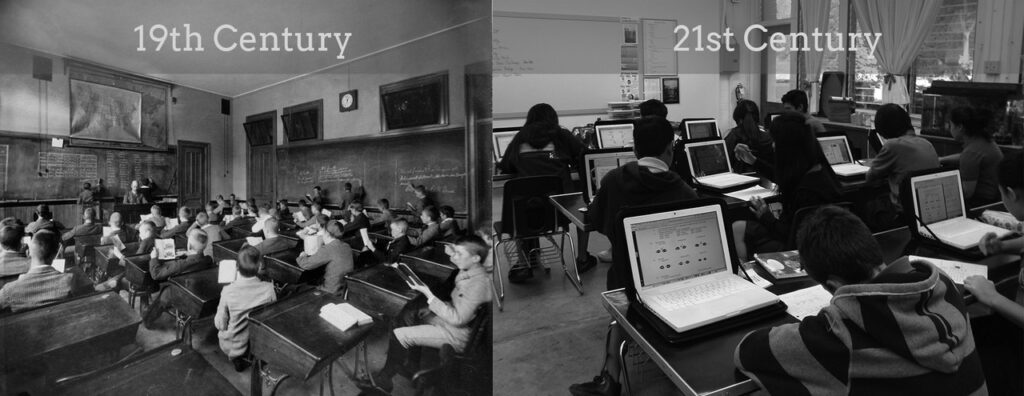
Picture of the classroom

The education system at the beginning of the 21st century has changed compared to the 19th century. While students still learn in classrooms, they can now explore knowledge online, not just through teacher lectures. Therefore, Universal Design for Learning (UDL) provides students with multiple ways to access knowledge and engage with learning content. Providing flexible learning methods enables learners to thrive in cyberspace. This optimizes learning efficiency and supports students in different contexts.

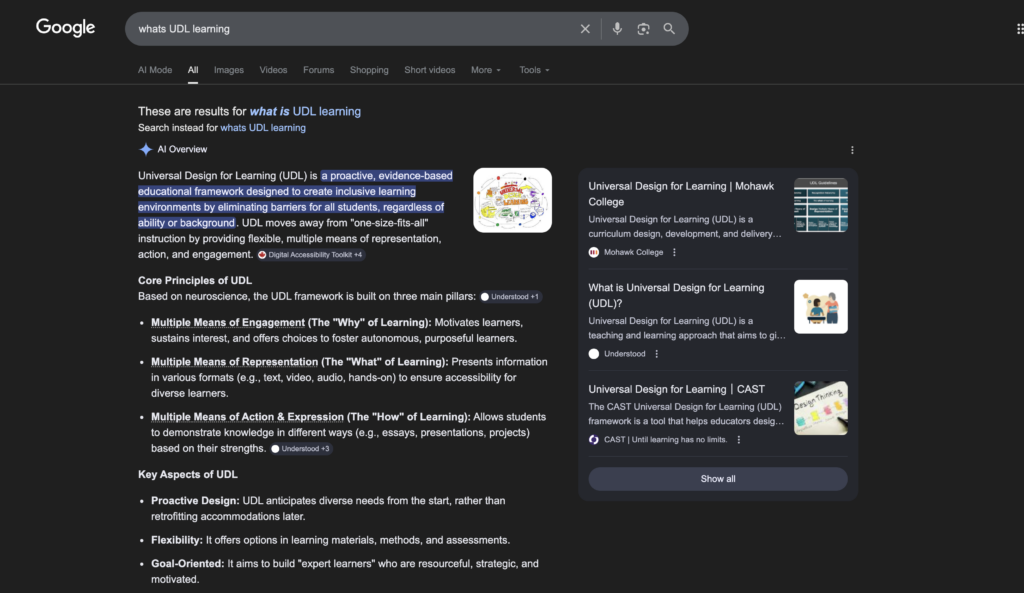
google webpage

Google is one of the tools I often use when I am dealing with theory or concept questions. Google has a huge database, so students can search for any theoretical question or concept they are unsure about. This makes Google a great tool for self-learning.

google webpage

For example, when I am confused about what UDL is, Google can provide the concept of UDL. As a result, this can help students learn more effectively and support self-learning. Students can look it up online and find the answer. This is much more effective than looking in a textbook and not knowing where to find the information. The only thing to be aware of is that some online information might be misleading or incorrect. Therefore, finding answers on a reliable website is an important factor that helps students learn.

youtube page

As an economics student at UVic, I use YouTube as a tool to help with learning. Sometimes, when I face a concept I don’t understand, I use YouTube. The biggest difference between YouTube and textbooks/notes is that, by watching YouTube, you can learn through video. The person in the video can walk you through the whole question step by step. This is a very useful tool when you are dealing with mathematical questions, because you can work on the question at the same time while watching the video. This can be very useful and effective for learning.

This means students can choose the best platform that works for them. Moreover, it also means that learning through different pathways has extended far beyond the four walls of the classroom. Each layer strengthens the others, turning a simple posting exercise into a richer cycle of learning experiences.

Students can build knowledge through their peers, instructors, or even by learning from others on different platforms. These platforms have played an important role in the learning process. Combining these factors can help students achieve a deeper and more effective learning experience. I believe students learning through these different platforms is a great example that combines social, teaching, and cognitive elements.

© 2026 Christian's EDCI

Theme by Anders NorenUp ↑