I think this will be an interesting topic to explore. Education across 19 countries was quite similar until 2019. After 2019, education methods, styles, and systems changed significantly. Before 2019, I would say most education remained the same. The main difference across these 19 countries was that people mainly received knowledge from textbooks or teachers. In the early 20th century, people were able to learn online through computers. But after 2019, education changed a lot. This term, I will discuss changes in education before 2019, in 2020, in 2021, and the future of education. In today’s topic, I will focus on education methods before 2019.
Looking back across 19 countries, I have noticed that educational systems and teaching methods have changed a lot because computers and online learning have become more common in people’s daily lives. Students can easily access technology and the internet to support their learning. Therefore, I would say that in the past, we mainly learned through textbooks or teachers but times has changed.
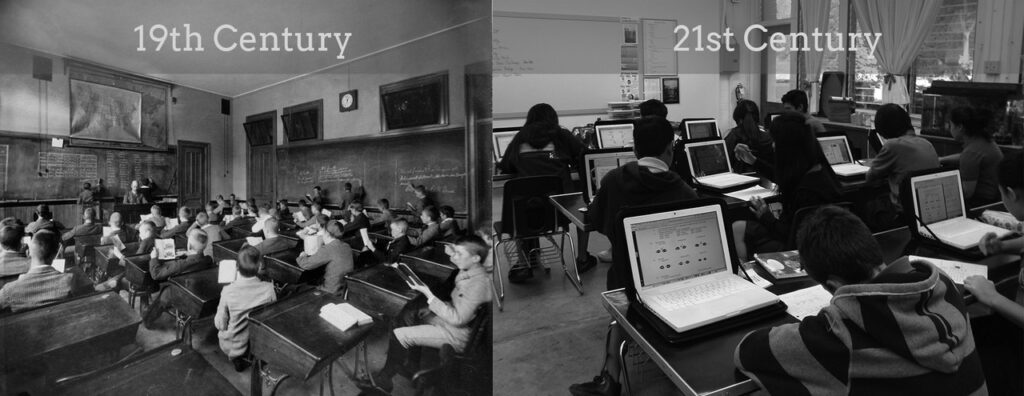
The education system at the beginning of the 21st century has changed compared to the 19th century. While students still learn in classrooms, they can now explore knowledge online, not just through teacher lectures. Therefore, Universal Design for Learning (UDL) provides students with multiple ways to access knowledge and engage with learning content. Providing flexible learning methods enables learners to thrive in cyberspace. This optimizes learning efficiency and supports students in different contexts.
Google is one of the tools I often use when I am dealing with theory or concept questions. Google has a huge database, so students can search for any theoretical question or concept they are unsure about. This makes Google a great tool for self-learning.
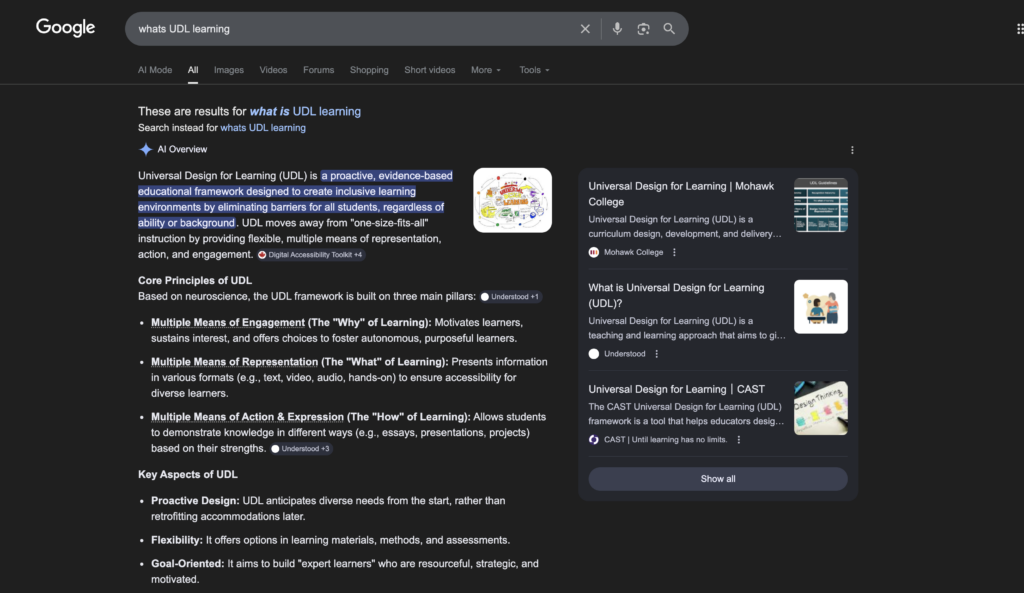
For example, when I am confused about what UDL is, Google can provide the concept of UDL. As a result, this can help students learn more effectively and support self-learning. Students can look it up online and find the answer. This is much more effective than looking in a textbook and not knowing where to find the information. The only thing to be aware of is that some online information might be misleading or incorrect. Therefore, finding answers on a reliable website is an important factor that helps students learn.
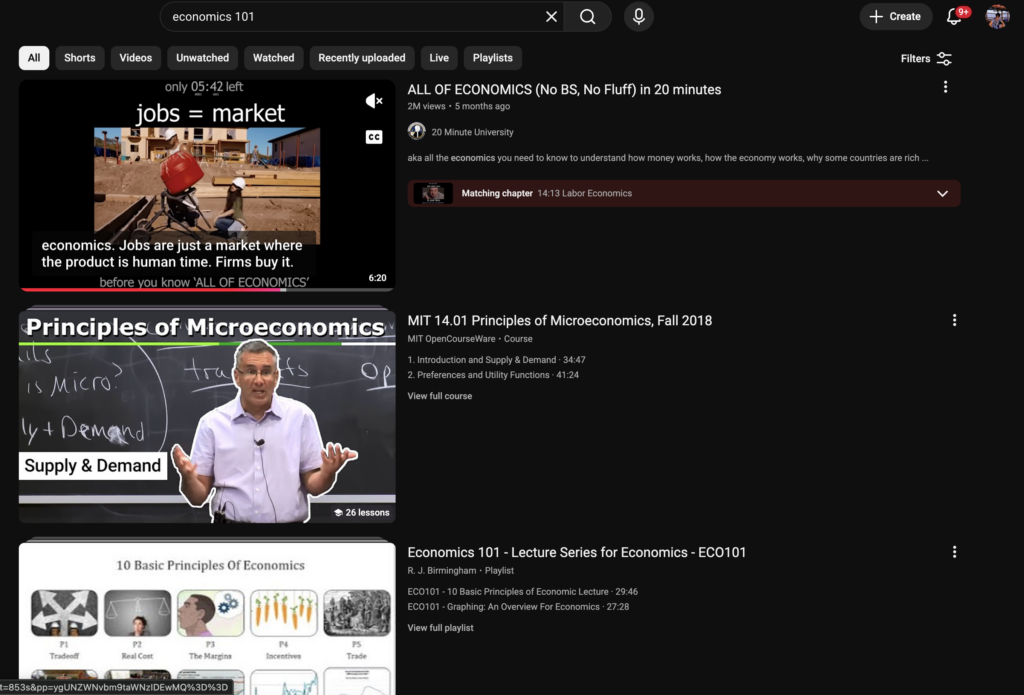
As an economics student at UVic, I use YouTube as a tool to help with learning. Sometimes, when I face a concept I don’t understand, I use YouTube. The biggest difference between YouTube and textbooks/notes is that, by watching YouTube, you can learn through video. The person in the video can walk you through the whole question step by step. This is a very useful tool when you are dealing with mathematical questions, because you can work on the question at the same time while watching the video. This can be very useful and effective for learning.
This means students can choose the best platform that works for them. Moreover, it also means that learning through different pathways has extended far beyond the four walls of the classroom. Each layer strengthens the others, turning a simple posting exercise into a richer cycle of learning experiences.
Students can build knowledge through their peers, instructors, or even by learning from others on different platforms. These platforms have played an important role in the learning process. Combining these factors can help students achieve a deeper and more effective learning experience. I believe students learning through these different platforms is a great example that combines social, teaching, and cognitive elements.
Leave a Reply